Computational Oncology & Bioinformatics Unit
Overview
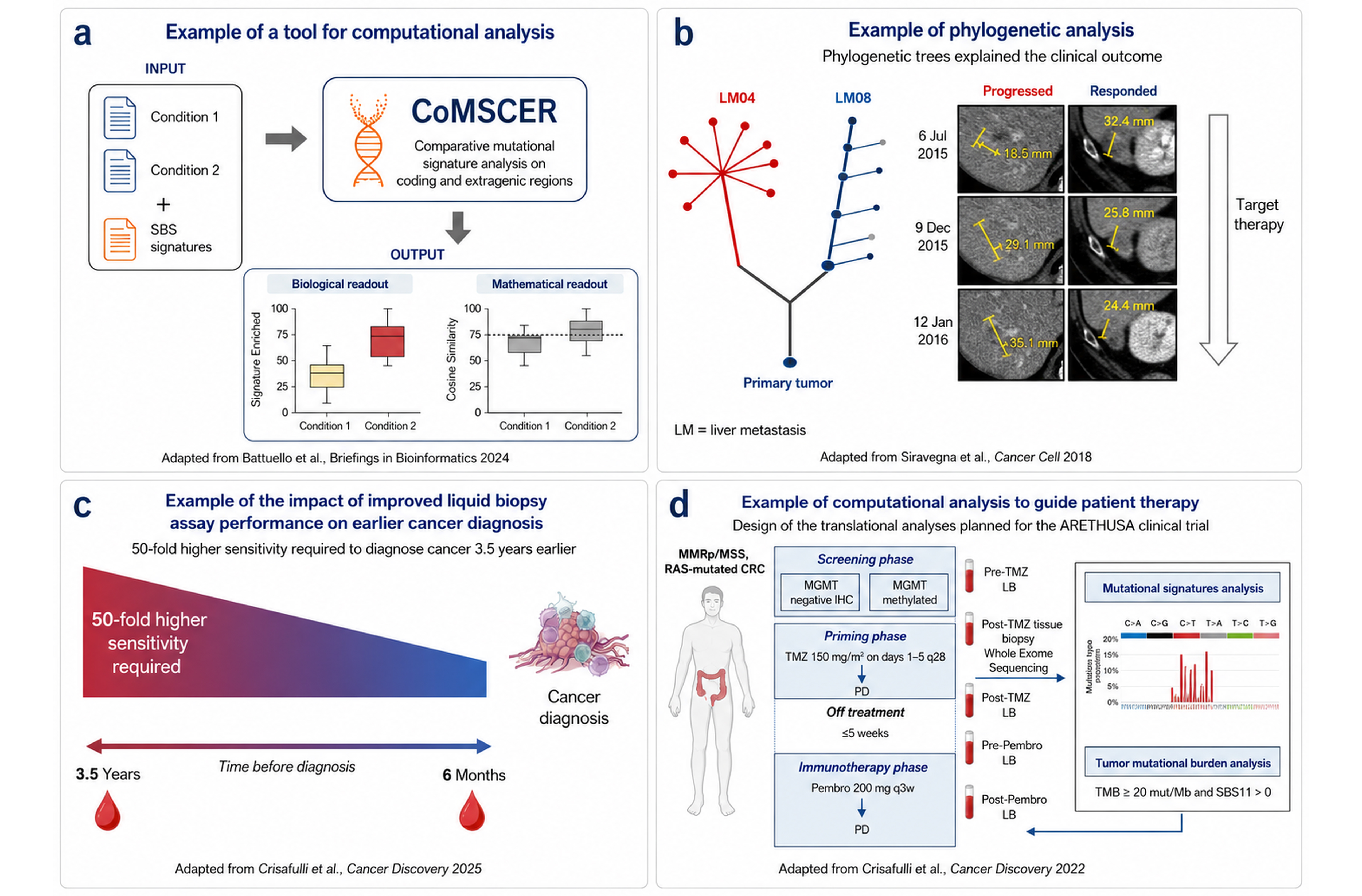
Cancer's molecular complexity poses one of the challenges of contemporary biomedical research. The Computational Oncology & Bioinformatics Unit is a research-led translational unit with an institutional collaborative mandate, advancing computational oncology by integrating molecular, clinical and translational data from preclinical models, clinical studies and institutional precision oncology programmes, consistent with IFOM's mission to advance molecular oncology research for the benefit of patients. Its work supports more precise patient stratification, the identification of new therapeutic vulnerabilities and the development of minimally invasive diagnostic approaches.
The Unit develops a scientific programme while enabling strategic institutional collaborations through co-designed analytical platforms, validated workflows, versioned pipelines, SOPs and clinical-molecular data integration frameworks. Its goal is to generate scientific, translational and institutional value through collaborative research, grant-funded projects, publications, training and technology development. The Unit is structured to promote and contribute to competitive funding applications at national and European level, and actively contributes to multi-partner research consortia.
Privileged access to IFOM's institutional prospective clinical cohorts such as ALFAOMEGA (colorectal cancer), METAMECH (breast cancer) and HERA (pan-cancer), provides a unique and continuously expanding substrate for translational computational research.
The Unit operates at the interface between computational oncology, translational bioinformatics, liquid biopsy, molecular data integration and precision oncology. Collaborative activities are structured around shared scientific objectives, defined governance, prioritization criteria and appropriate recognition of scientific contributions.
Giovanni Crisafulli
Head of Computational Oncology & Bioinformatics Unit
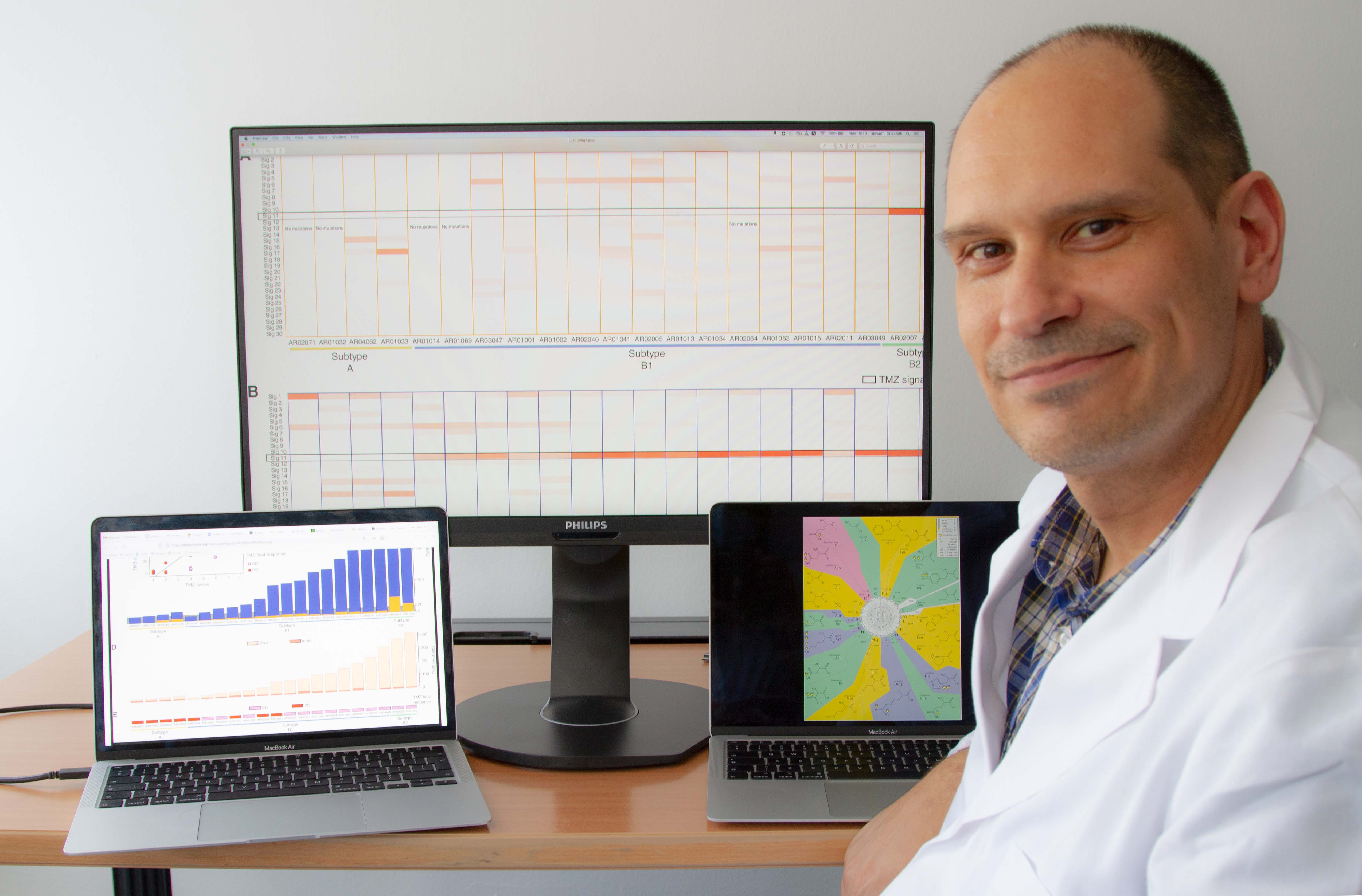
Giovanni Crisafulli is a translational computational genomics scientist working at the interface between cancer biology, bioinformatics, liquid biopsy and precision oncology. His research focuses on understanding how cancers evolve, acquire resistance to therapy and generate molecular vulnerabilities that can be translated into clinically actionable biomarkers.
His scientific path began with training in biological sciences and continued with a PhD in Mathematical Logic, Computer Science and Bioinformatics. This interdisciplinary background shaped his approach to cancer research, where computational and quantitative methods are used not as an endpoint, but as tools to interpret tumour biology and address clinically relevant questions.
Over the years, Giovanni has contributed to translational studies and clinical trials in colorectal cancer by integrating genomic data from tumour tissue, circulating tumour DNA and other minimally invasive samples with clinical information. His work has helped define how liquid biopsy can be used to monitor tumour evolution, track resistance mechanisms and guide precision oncology strategies.
A central aim of his research is to transform molecular complexity into robust biomarkers for cancer interception, minimal residual disease assessment, therapy selection and patient stratification. His scientific interests include tumour evolution, mutational processes, mismatch repair, therapy-induced hypermutation, liquid biopsy and computational frameworks for the interpretation of cancer genomic data.
His scientific and scholarly work has appeared in leading international journals including Science, Nature, Cell, Cancer Discovery, Nature Medicine, Cancer Cell, Nature Genetics, Briefings in Bioinformatics and ESMO Open.
Research interests
Research interests are centred on translational functional genomics and computational oncology. We develop computational and experimental approaches that connect patient-derived sequencing data, functional perturbation systems and clinically grounded questions.
The Unit aims to transform genomic, transcriptomic and multi-omic profiling into mechanistic and actionable readouts of tumour evolution, DNA repair status, minimal residual disease, early cancer interception and treatment response. A key objective is to establish new computational methodologies capable of addressing complex translational problems that cannot be adequately resolved by standard metrics or conventional analytical approaches.
Our work focuses on quantitative frameworks to measure and interpret tumour evolution, molecular heterogeneity, residual disease dynamics, therapy-induced phenotypic transitions and clinically relevant vulnerabilities across tissues, blood and other minimally invasive specimens. The common thread is to make molecular information interpretable in clinically meaningful contexts and to test the resulting hypotheses in experimental models that preserve patient-specific genomic features.
Selected Publications
-
Crisafulli G, Sartore-Bianchi A, Lazzari L, Pietrantonio F, Amatu A, Macagno M, Barault L, Cassingena A, Bartolini A, Luraghi P, Mauri G, Battuello P, Personeni N, Zampino MG, Pessei V, Vitiello PP, Tosi F, Idotta L, Morano F, Valtorta E, Bonoldi E, Germano G, Di Nicolantonio F, Marsoni S, Siena S, Bardelli A.
Temozolomide treatment alters mismatch repair and boosts mutational burden in tumor and blood of colorectal cancer patients.
Cancer Discov. 2022 May 6:candisc.1434.2021. doi: 10.1158/2159-8290.CD-21-1434. Epub ahead of print. PMID: 35522273. - Siravegna G*, Lazzari L*, Crisafulli G* (co-first author), Sartore-Bianchi A, Mussolin B, Cassingena A, Martino C, Lanman RB, Nagy RJ, Fairclough S, Rospo G, Corti G,Bartolini A, Arcella P, Montone M, Lodi F, Lorenzato A, Vanzati A, Valtorta E,Cappello G, Bertotti A, Lonardi S, Zagonel V, Leone F, Russo M, Balsamo A, TruiniM, Di Nicolantonio F, Amatu A, Bonazzina E, Ghezzi S, Regge D, Vanzulli A,Trusolino L, Siena S, Marsoni S, Bardelli A.
Radiologic and Genomic Evolution of Individual Metastases during HER2 Blockade in Colorectal Cancer.
Cancer Cell. 2018 Jul 9;34(1): 148-162.e7. doi:10.1016/j.ccell.2018.06.004. PubMed PMID:29990497. - Battuello P, Corti G, Bartolini A, Lorenzato A, Sogari A, Russo M, Di Nicolantonio F, Bardelli A, Crisafulli G (last author).
Mutational signatures of colorectal cancers according to distinct computational workflows.
Brief Bioinform. 2024 May 23;25(4):bbae249. doi: 10.1093/bib/bbae249. PMID: 38783705; PMCID: PMC11116831.